Insights
Honest Insights On The Robertson Opus
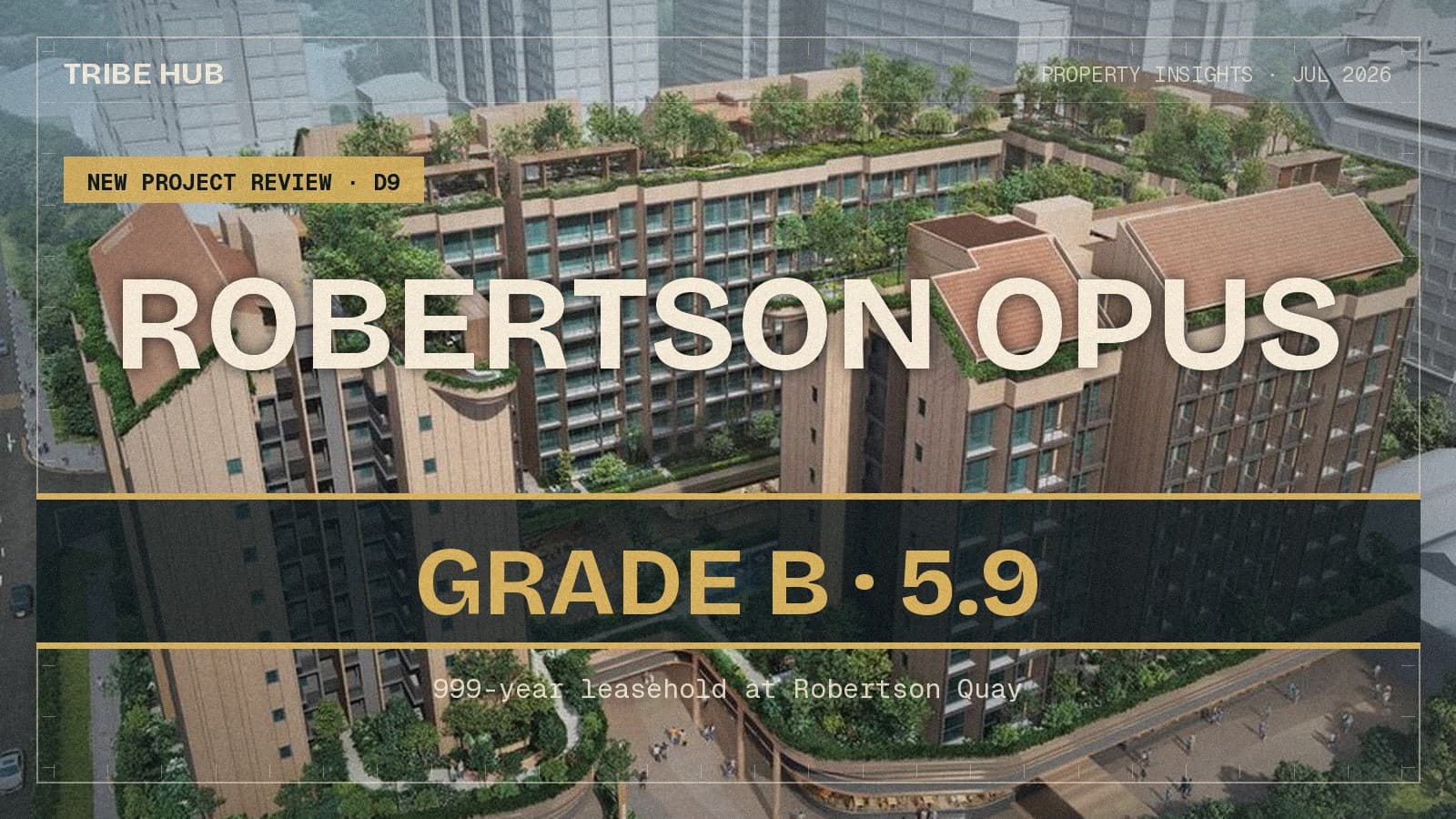
The Robertson Opus grades B (5.9) on the New Project Scorecard — a 348-unit, 999-year leasehold by Frasers Property and Sekisui House at Robertson Quay, District 9. Solid transport and scale, but modelled price growth of 2.8% sits just under a 3% bar.
By TRIBE Editorial · 19 July 2026 · 11 min read
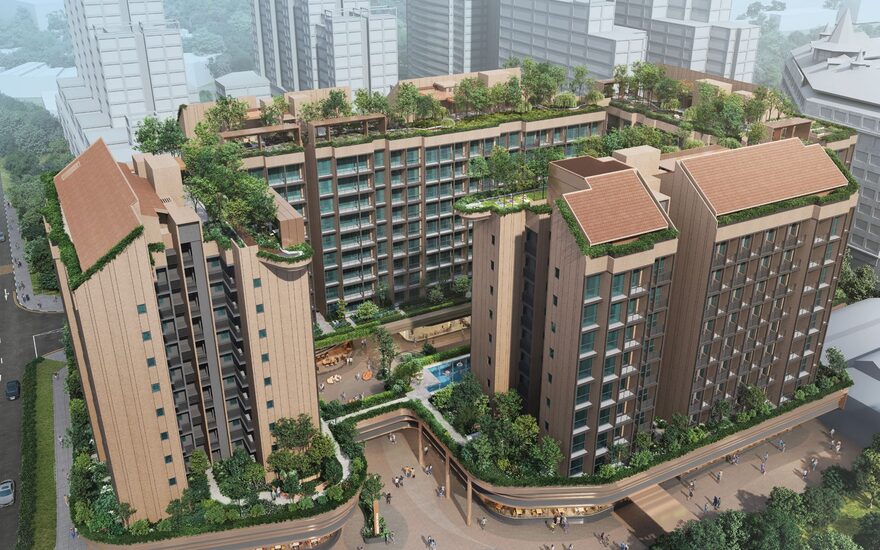
The Robertson Opus is a 348-unit, 999-year leasehold development at Robertson Quay in District 9 — the redevelopment of the former Fraser Place at Robertson Walk by Frasers Property and Sekisui House, a 0.42km walk to Fort Canning MRT on the Downtown Line, with a retail podium of around 26 curated food-and-beverage and lifestyle units wrapped around a sunken courtyard. It grades a B (5.9) on our New Project Scorecard (NPS), and it is one of the few genuinely still-selling launches in the Core Central Region: around 140 of its 348 units remain a year after a launch weekend that cleared 41%. This is a look at what the B rests on, what the remaining stock actually costs against the project's own transacted record and its adjusted neighbours, and why the honest read here is a tenure-and-location hold rather than a capital-growth story. Methodology published. No spin.
The NPS grades a project's district-level fundamentals over a 10-year window — capital appreciation, rental growth, schools, MRT access and project size — from real URA transacted data. Its growth figure is not a forecast: it is the appreciation of resale homes within one kilometre, lifted for the project's own size, transport and schools. It is backward-looking by design, and that matters here, because The Robertson Opus scores well on the things you can see and moderately on the one thing that drives price.
The scorecard: a solid B with one soft centre
The Robertson Opus earns its B on transport, scale and schools — with capital appreciation the clear drag.
| NPS factor | Score /10 | What it reflects |
|---|---|---|
| Project Size | 8.0 | 348 units — a mid-sized development with a full facilities deck and a liquid resale pool |
| MRT Proximity | 7.0 | A 0.42km walk to Fort Canning MRT (Downtown Line) |
| School | 6.7 | One primary within 1km — River Valley Primary (0.69km, oversubscribed) |
| Rental Growth | 3.2 | District 9 rents grew ~4.4%/yr over the decade — moderate |
| Capital Appreciation | 4.9 | 1km resale grew ~2.1%/yr; lifted +0.7 for size, transport, schools → ~2.8%/yr |
The top of the card is genuinely good for a city-fringe address. A 348-unit scale scores 8.0 — big enough for a proper facilities deck and a deep resale market, without the thinness that plagues boutique CCR blocks. Transport is a solid 7.0, a four-to-five-minute walk to Fort Canning on the Downtown Line, and schools score 6.7 on River Valley Primary inside the one-kilometre ring, though it is heavily oversubscribed and Primary 1 priority is measured door-to-door — confirm the distance on OneMap before counting on the ballot.
The soft centre is capital appreciation at 4.9. Resale homes within a kilometre grew only about 2.1% a year over the past decade — unremarkable, and a reminder that prime District 9 has spent years digesting supply rather than compounding. The model lifts that by +0.7 for the project's size, transport and schools, taking projected growth to about 2.8% a year — which is the number that matters, because it sits just under the 3% bar we use as the line between a growth asset and a hold. Rental growth is 3.2 (District 9 rents up ~4.4%/yr, moderate) and the gross yield is a slim 2.71%, so income does not rescue the appreciation story either.
What's left — and the project's own record
A year on, The Robertson Opus is still one of the more available CCR launches. From URA caveats, roughly 207 of 348 units have transacted, leaving around 140. Here is the project's own record by bedroom — the median transacted PSF over the last two years of caveats, which is also the fair-value anchor the NPS calculator uses for the holding read below:
| Type | ~Size | Median transacted PSF | ~Quantum |
|---|---|---|---|
| 1 Bedroom | 495 sqft | S$3,246 | ~S$1.61m |
| 2 Bedroom | 721 sqft | S$3,400 | ~S$2.45m |
| 3 Bedroom | 1,023 sqft | S$3,350 | ~S$3.43m |
| 4 Bedroom | 1,539 sqft | S$3,404 | ~S$5.24m |
At its 2025 launch weekend the project sold 143 units (41%) at an average of S$3,360 psf, with two-bedroom and two-bed-plus-study units taking about 45% of sales (S$2.17m–S$2.63m, or S$3,149–S$3,540 psf) and three-bedders nearly 39% (S$3.1m–S$4.039m, S$3,079–S$3,506 psf). Buyers were 83% Singaporean, 16% Permanent Residents (mainly China and Indonesia) and 1% foreign. The remaining stock is the later-phase and higher-floor inventory, which typically sits at or a touch above these medians rather than below — so the transacted figures are, if anything, the friendly end of what is left.
The benchmark: priced right against the adjusted neighbours
You cannot set a new launch's PSF against a resale comp's raw PSF — the resale is on an older, decaying lease and, if its planning permission predates 22 January 2023, on a larger non-harmonised strata area that understates its true PSF. The NPS calculator lifts each nearby resale to a like-for-like "as-new" level: leasehold topped back to a fresh lease via Bala's Table, plus 6% (1–2BR) / 8% (3BR+) for GFA harmonisation. Run against the five most comparable projects within a kilometre:
| Nearby resale | Tenure · TOP | Raw PSF | Adjusted "as-new" |
|---|---|---|---|
| The Avenir | Freehold · 2024 | S$3,181 | S$3,373 |
| Martin Place Residences | Freehold · 2011 | S$2,768 | S$3,375 |
| The Wharf Residence | Freehold · 2012 | S$2,412 | S$3,375 |
| Martin Modern | 99-yr · 2021 | S$2,792 | S$3,186 |
| The Landmark | 99-yr · 2025 | S$2,475 | S$2,475 |
The Robertson Opus's two-bedroom median of S$3,400 psf sits right at the top of that adjusted band — level with newly completed freehold neighbours restated as-new (~S$3,373–S$3,375), and above the 99-year comparables. In other words, you are paying a genuine as-new price with no obvious discount and no obvious overreach: the premium over the raw resale numbers is almost entirely explained by lease and GFA adjustment, not by hype. What you are buying at that price is the near-freehold 999-year tenure — a real structural advantage over the 99-year leasehold pack it competes with — and the Robertson Quay lifestyle address, not a valuation gap.
The Robertson Quay question
The bull case is the location doing what it already does well. Robertson Quay is the quietest and most residential of the three Singapore River quays, and The Robertson Opus folds a curated retail-and-dining podium into the ground plane, which is the sort of amenity that supports rents and resale desirability in a mature precinct. The 999-year lease is the standout: for practical purposes it prices and ages like freehold, which is rare on the river and is the single feature most likely to hold value over a long hold.
The honest counterweight is that District 9's price record is exactly what the scorecard says it is. Prime central homes have compounded slowly — about 2.1% a year within this ring over the decade — because the CCR has been the softest of the three market segments for years, weighed by additional buyer's stamp duty on foreign and investment demand. A 999-year tenure protects the downside; it does not manufacture the growth. This is an address you buy to hold and to live in or let, not one the model expects to run.
How long you'd likely hold
Seller's stamp duty runs for four years (16%, 12%, 8%, 4%), so no exit before year four is realistic, and the shortest tier we publish is four-to-six years. Using the NPS calculator's model — 2.8% expected growth, a 3% target — and taking each bedroom's own median transacted PSF as the fair-value anchor, here is the price-only read for the remaining stacks.
| Available stack | PSF | Hold (price only) |
|---|---|---|
| 1 Bedroom · 495 sqft | S$3,246 | Doesn't reach 3% |
| 2 Bedroom · 721 sqft | S$3,400 | Doesn't reach 3% |
| 3 Bedroom · 1,023 sqft | S$3,350 | Doesn't reach 3% |
| 4 Bedroom · 1,539 sqft | S$3,404 | Doesn't reach 3% |
On price growth alone, at the transacted median, no stack clears the 3% bar within a realistic hold — because 2.8% modelled growth simply sits below it. But the gap is a whisker: the model clears 3% at the four-year floor on any unit negotiated even about 1% below its bedroom's transacted median, so a keen buyer who lands a genuine discount on the leftover stock flips the read. Add the 2.71% gross yield and the modelled total return is roughly 5.5% a year — respectable, but a yield-and-tenure return, not price appreciation. The stacks that make the most sense are therefore the ones a buyer will actually use or let: the deep two- and three-bedroom pools, entered at or below the median. Figures are gross of stamp duty, financing and selling costs.
The honest verdict
The Robertson Opus is what a B looks like when the fundamentals you can see are solid and the one that drives price is not. A 348-unit scale, a four-minute walk to Fort Canning, River Valley Primary in the ring and a 999-year lease carry the grade; a decade of ~2.1% resale growth in prime District 9 caps it, leaving modelled growth at 2.8% — just under the line. On pricing there is no trap and no bargain: the two-bedroom median of S$3,400 psf sits right on the adjusted as-new level of its nearest neighbours, so what you pay for is the near-freehold tenure and the quay address rather than a valuation edge. For an own-stay buyer or a landlord who wants a 999-year home on the river, at or below the transacted median, that is a coherent B. For a buyer underwriting capital growth on a short horizon, the model says wait — the 3% bar is close, but this stock does not clear it on price alone. See the full scorecard and run your own unit price through the holding-period calculator at tribesg.com/nps.
Sources: NPS quality grade (B, 5.9), the five factor scores, modelled growth (2.8%) and gross rental yield (2.71%) per the TRIBE New Project Scorecard (URA Data Service transacted PSF; 1km resale trend of ~2.1%/yr lifted +0.7 for project size, transport and schools; figures as at July 2026). Project facts — 348 units, 999-year leasehold, Frasers Property and Sekisui House, redevelopment of the former Fraser Place at Robertson Walk, retail podium with ~26 food-and-beverage and lifestyle units — and the launch-weekend result (143 units, 41%, average S$3,360 psf; 2BR/2BR+study ~45% of sales at S$3,149–S$3,540 psf; 3BR ~39% at S$3,079–S$3,506 psf; buyers 83% Singaporean, 16% PR, 1% foreign) per EdgeProp, "Frasers Property-Sekisui House sells 41% of units at The Robertson Opus at an average price of $3,360 psf" and "Frasers Property to preview 999-year leasehold The Robertson Opus at prices starting from $3,150 psf". Own-project transacted medians by bedroom (1BR S$3,246, 2BR S$3,400, 3BR S$3,350, 4BR S$3,404) and remaining inventory (~140 of 348) derived from URA caveats over the last 24 months via the NPS calculator. Comparable adjustment (The Avenir, Martin Place Residences, The Wharf Residence, Martin Modern, The Landmark) per the calculator's published methodology — Bala's Table lease top-up plus 6% (1–2BR) / 8% (3BR+) GFA harmonisation. Primary 1 priority distance is measured door-to-door, so confirm any 1km claim on OneMap before relying on it. Scores and holding periods are model outputs, not financial advice.
Silas Tan is a District Director at Huttons Asia and co-founder of TRIBE. He built the New Project Scorecard (NPS) and Resale Project Scorecard (RPS) on URA transacted data. This article is for informational purposes and does not constitute financial or investment advice. CEA Registration R000303I.
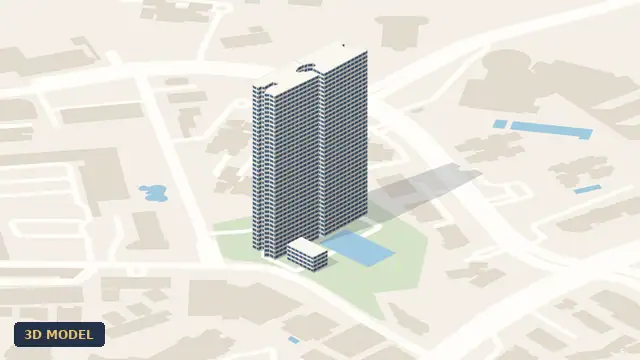
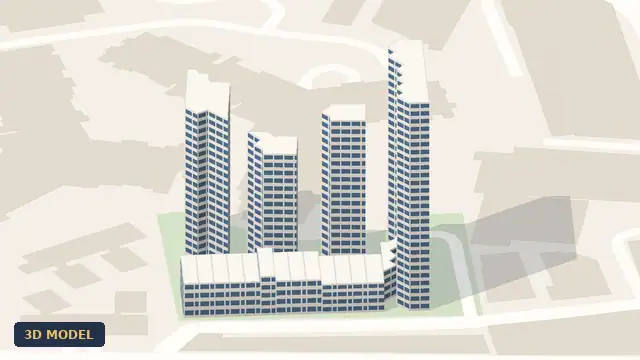
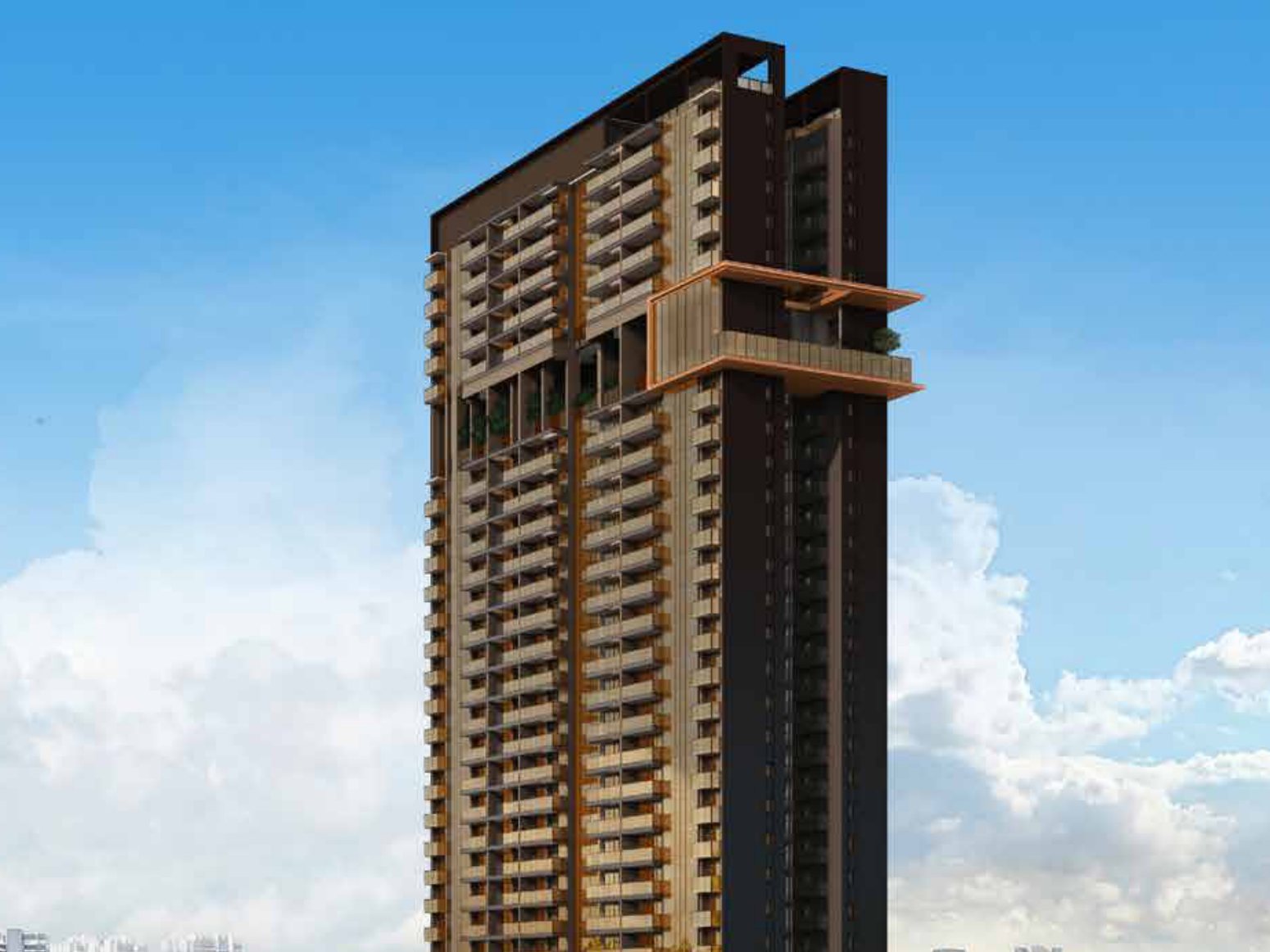
Condos in this article

Check how your condo scores
2,350 condos independently scored across 7 weighted factors. No registration required.
Score my resale →Prefer a personal read on your situation? Arrange a consultation →Keep reading
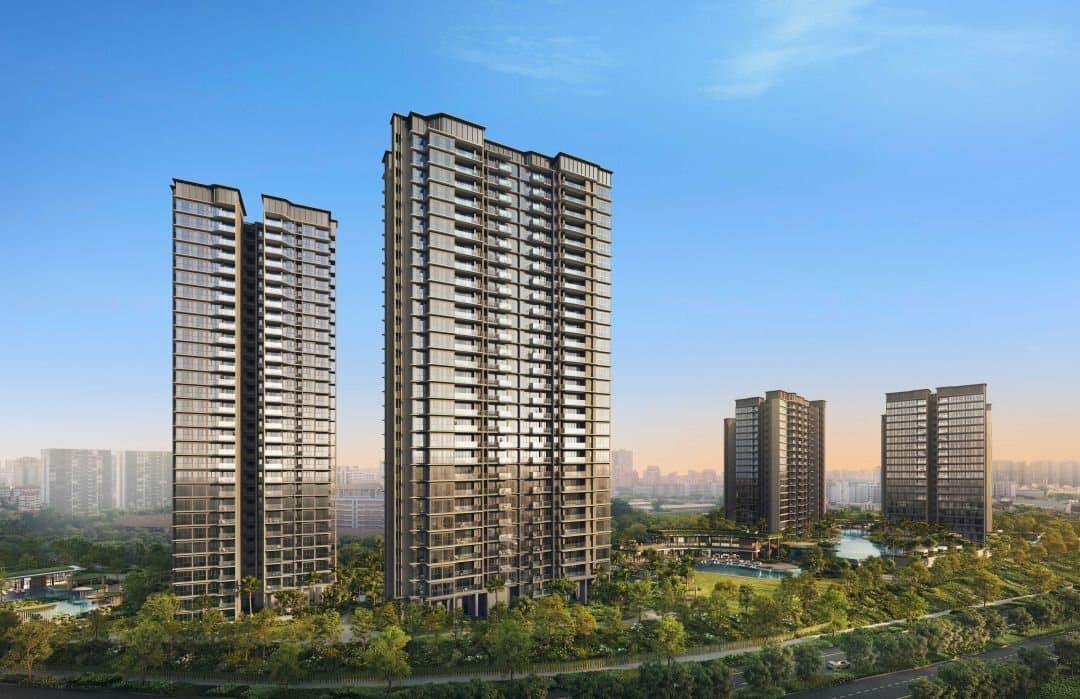

Next step

TRIBE Editorial · Reviewed by Silas Tan
Co-Founder, TRIBE · District Director, Huttons Asia · Ex-Mortgage Banker (AVP) · >1,000 families advised · CEA R000303I
How TRIBE scores and checks its analysis
Spotted an error, or a figure that has moved since publication? Tell us and we will correct it.
This article is for informational purposes only and does not constitute financial or investment advice.