Insights
The First-Mover Premium: What the Lentor Data Actually Shows
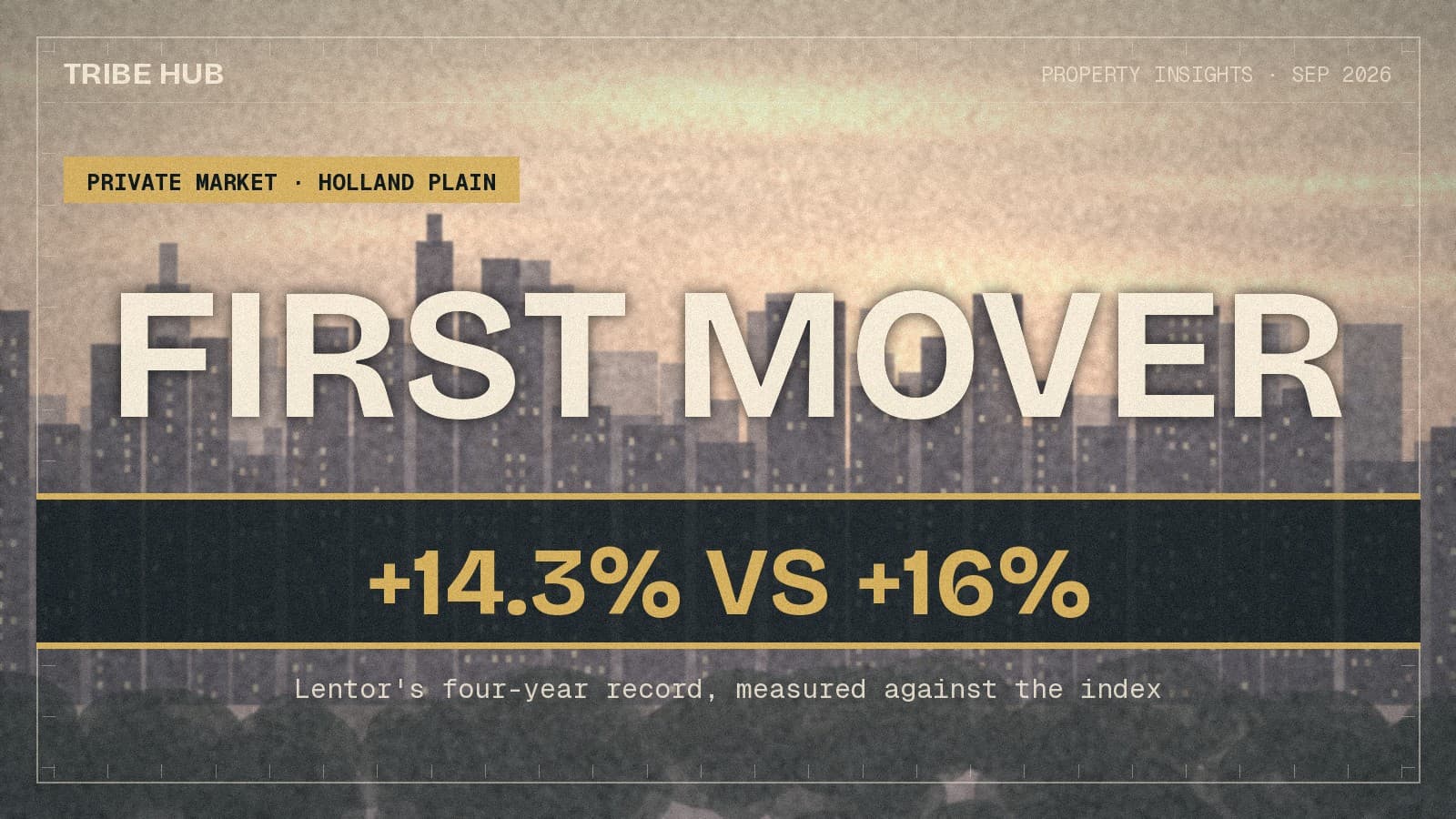
Every new precinct is sold on the promise that buying first pays. Holland Plain rests that claim on one exhibit — Lentor Modern, up 14.3% since launch. Measured against the non-landed index over the same window, that is roughly market.
By TRIBE Editorial · 4 September 2026 · 7 min read
A new residential precinct opens at Holland Plain this month, and with it comes the oldest argument in the new-launch business: buy the first project, because the first project sets the benchmark everyone else prices against.
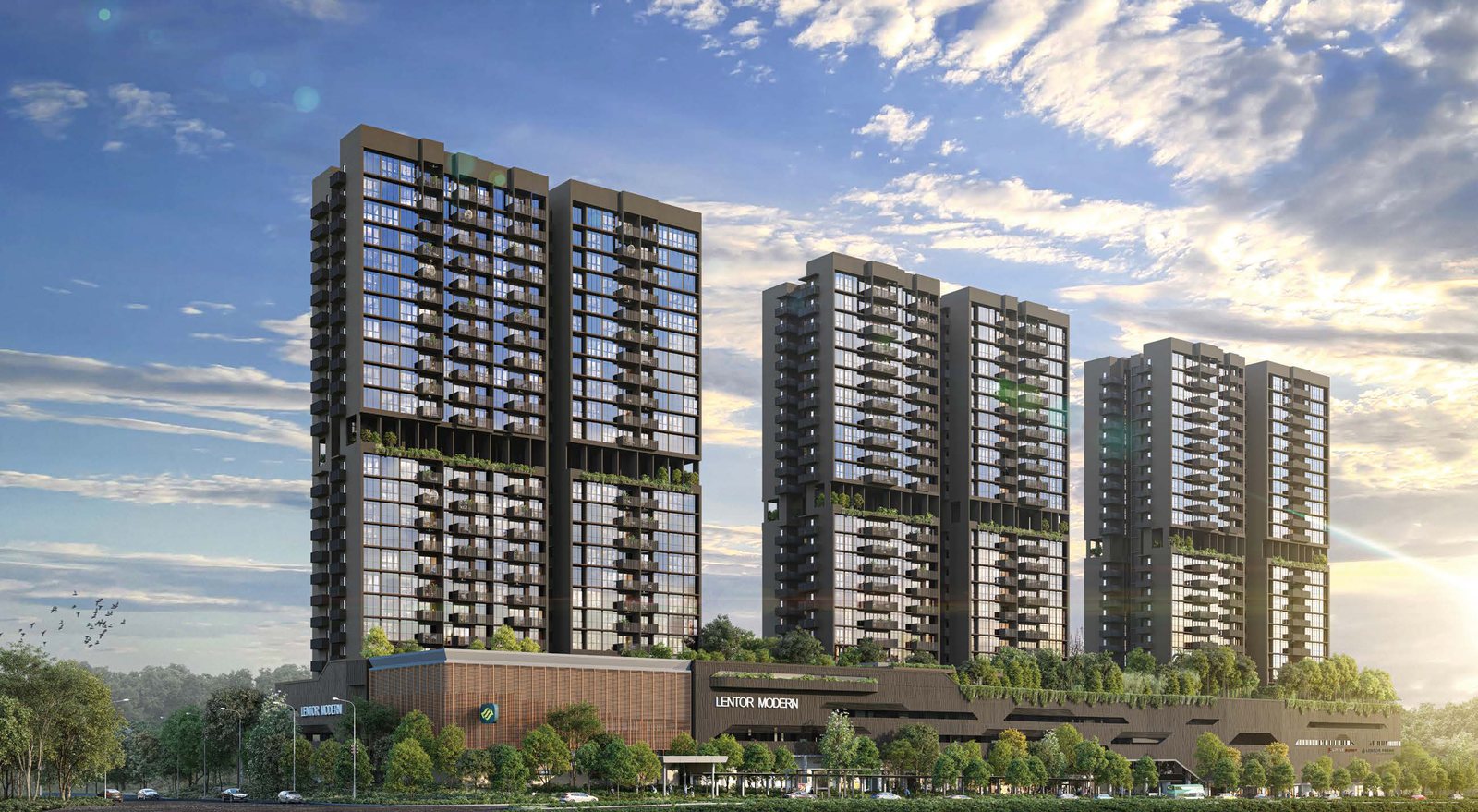
The argument has one piece of public evidence behind it. Lentor Modern, launched in September 2022 as the first project in the Lentor precinct, has moved from a median launch price of S$2,103 psf to S$2,403 psf in 2026 year-to-date — a gain of 14.3%. That figure is real. What it is not is proof of a first-mover premium, because over the same window the broad market did the same thing.
The claim, and the single exhibit behind it
Holland Plain is eight plots under the URA 2025 Master Plan, expected to yield roughly 2,500 homes. Sim Lian took the first parcel in July 2025 and the second in May 2026; URA is scheduled to release the third in December. The first project on the first parcel — Amberwood at Holland, 212 units in three-, four- and five-bedroom configurations — previews on 11 September and launches on 26 September.
The industry read is consistent and openly stated. PropNex's Kelvin Fong describes the first-mover position as the opportunity to "set a benchmark for the area." Huttons' Mark Yip points to Lentor: seven private projects followed Lentor Modern into Lentor Hills, and each was priced with reference to it. CBRE's Tricia Song puts a number on the outcome — initial owners made an average of 14% capital gains over three to four years.
Nobody in that chain is being misleading. But a 14% gain is only evidence of a premium if it beat what you would have earned owning something else. So we tested it.
Testing it against the index
Lentor Modern's launch median is quoted across 2022–2023, not at a single point, so the honest test runs it against several anchor quarters of URA's non-landed price index rather than one.
| Anchor quarter | Non-landed index then | Index to 2Q2026 | Lentor Modern | Difference |
|---|---|---|---|---|
| 3Q2022 (launch quarter) | 181.6 | +16.0% | +14.3% | −1.7 pp |
| 4Q2022 | 182.1 | +15.7% | +14.3% | −1.4 pp |
| 1Q2023 | 186.8 | +12.7% | +14.3% | +1.5 pp |
| 2Q2023 | 185.7 | +13.4% | +14.3% | +0.9 pp |
URA private residential property price index, non-landed, from the published series on data.gov.sg. 2Q2026 = 210.6, the latest quarter available.
The answer is not "the first-mover premium is a myth." It is narrower and more useful than that: measured against the market, the premium is somewhere between −1.7 and +1.5 percentage points over nearly four years, depending entirely on which quarter you anchor the launch median to. Annualised, Lentor Modern compounded at about 3.6% a year against an index that compounded at about 4.0%.
Those buyers did well. They did roughly as well as the non-landed market did. The first-mover position is not visible in the data as a distinct source of return — which is a different claim from the one being made when a precinct opens.
What the land actually cost
The stronger version of the first-mover argument is not about the buyer at all. It is about the land.
Sim Lian paid S$368.37 million, or S$1,432 psf ppr, for the first Holland Plain parcel in July 2025, as the top of five bids. Ten months later it took the neighbouring parcel for S$454 million, or S$1,491 psf ppr — a 4.1% higher land rate, on a sole bid. The third parcel comes to market in December.
That escalation is the mechanism the first-mover story is really describing. A project built on cheaper land can be priced below its future neighbours and still earn the same margin. It is a supply-cost argument, and it is sound as far as it goes — but it caps out at whatever the land-cost gap is. Here that gap is 4.1% over ten months, against a project where land is roughly 48% of an estimated S$3,000 psf selling price. Carried through, that is a low-single-digit pricing advantage over the next project, not a structural one.
It is also worth noting what a sole bid on the second parcel says: at S$1,491 psf ppr, in May 2026, no other developer wanted the site. The benchmark being set at Holland Plain is being set largely by one buyer.
The comparables need adjusting before they compare
Pricing chatter around Amberwood puts it near S$3,000 psf, with reference to recent District 10 and 11 launches — Skye at Holland at an average of S$2,953 psf in October 2025, Dunearn House at S$3,140 psf in July 2026, UpperHouse at Orchard Boulevard at S$3,350 psf at its July 2025 launch.
The resale comparables need more work. The nearby freehold stock is old, and all of it predates gross floor area harmonisation, which means its quoted PSF is understated relative to a harmonised new project — the older strata areas still count air-con ledges and void space, so the same home reads as larger and cheaper per square foot than it is. Amberwood is also 99-year leasehold against freehold comps, which cuts the other way.
Run both adjustments — +8% for harmonisation on three-bedroom-and-larger stock, then a 4% haircut to bring a freehold comp to a fresh-99-year equivalent — and the bridge looks like this:
| Comparable | Raw median PSF, 2026 | Harmonisation-adjusted | As-new 99-year equivalent | S$3,000 psf vs it |
|---|---|---|---|---|
| Royalgreen (TOP 2022) | S$2,817 | S$3,042 | S$2,921 | +2.7% |
| The Cascadia (TOP 2011) | S$2,392 | S$2,583 | S$2,480 | +21.0% |
| The Tessarina (TOP 2003) | S$2,241 | S$2,420 | S$2,323 | +29.1% |
| Maplewoods (TOP 1997) | S$2,210 | S$2,387 | S$2,291 | +30.9% |
Raw medians per CBRE and ERA from 2026 caveats. Harmonisation uplift of 8% applied to three-bedroom-and-larger stock; freehold-to-fresh-99-year factor of 0.96. Adjustments are estimates, and the older the comparable the more work the estimate is doing.
Against the newest comparable — Royalgreen, completed 2022 — a S$3,000 psf launch is a 2.7% premium, not the 6% to 36% the raw numbers suggest. Against 1997 stock it is a genuine 31%, and most of that gap is twenty-nine years of building age, not location.
What a first-mover is actually buying
Three things, on this evidence.
A land-cost advantage over the next project in the precinct, currently worth about 4% and shrinking into whatever December's tender does. A selection advantage — 212 units in a precinct that will eventually hold about 2,500, with first pick of stack, orientation and layout, which is worth something real and is never in the index. And a timing bet on infrastructure: King Albert Park becomes a Downtown Line–Cross Island Line interchange targeted for 2032, against an Amberwood completion targeted for June 2030.
What the data does not support is the fourth thing, the one that does the selling: that being first is itself a source of outperformance. Over Lentor's four years, it wasn't. Buying the first project in a new precinct looks, on the only public record we have, like buying the market — with a better unit and a longer wait.
That may still be the right purchase. It is simply not the argument being made for it.
Figures are gross of stamp duty, financing and selling costs. Index comparisons use the URA non-landed price index and are not adjusted for project-specific mix, floor or stack. Methodology published. No spin.
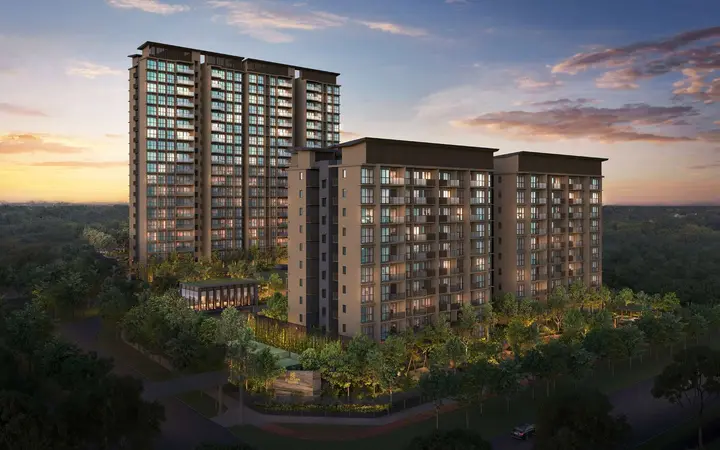
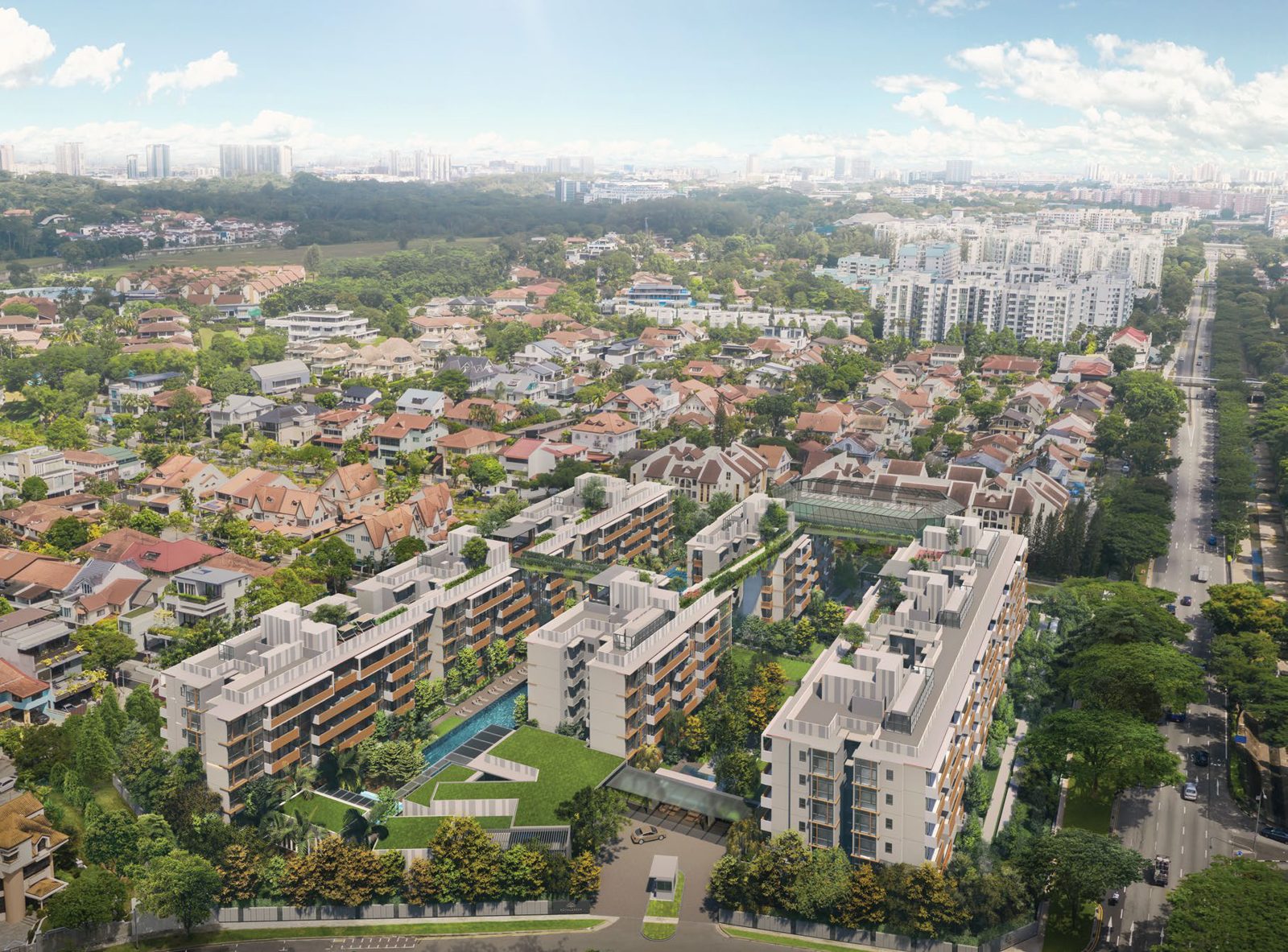
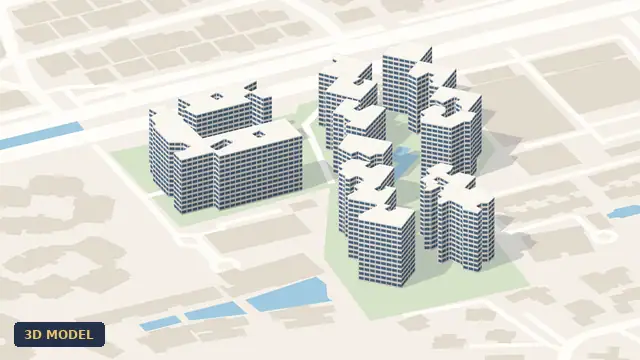
Condos in this article
Check how your condo scores
2,350 condos independently scored across 7 weighted factors. No registration required.
Score my resale →Prefer a personal read on your situation? Arrange a consultation →Keep reading

12 October 2026Private Property Market
Five Foreigners Were Approved to Buy a Good Class Bungalow in a Decade. None Since 2021.

11 October 2026Private Property Market
One S$70 Million Deal Decides Whether the Shophouse Quarter Was Up or Down
10 October 2026Private Property Market
A Record S$42.4 Billion. A Quarter of It Was the Government Selling Land.
Next step

TRIBE Editorial · Reviewed by Silas Tan
Co-Founder, TRIBE · District Director, Huttons Asia · Ex-Mortgage Banker (AVP) · >1,000 families advised · CEA R000303I
How TRIBE scores and checks its analysis
Spotted an error, or a figure that has moved since publication? Tell us and we will correct it.
This article is for informational purposes only and does not constitute financial or investment advice.